Jeep is an American SUV brand manufactured by Willys since 1941. At first, they produced their vehicles for the military, and after the war they started selling civilian cars.
Although in the beginning the Jeep brand did not make cars for everyone, today it is the most famous SUV manufacturer in the world, and often the word “Jeep” is simply synonymous with SUV. Today, the Jeep brand is part of the Italian-American conglomerate Fiat Chrysler Automobiles.
History of Jeep
The history of Jeep began in 1940 with the US Army’s call for tenders for a lightweight reconnaissance vehicle. Willys-Overland was one of the candidates and developed a prototype for the tender in just 49 days. The creator of the Willys Quad prototype was Vice President of Engineering Delmar G. Roos. As a result of field-testing and verification by U.S. military specialists, the Willys design was selected. After a series of modifications, the Willys Quad turned into the Willys MA and then the Willys MB, but it was most topically referred to as the “Jeep” as the letters “GP” (Ji-Pi) are pronounced, an abbreviation for “general purpose”. Willys-Overland produced over 368,000 vehicles for the U.S. military.
Jeep Civilian Cars
After the war ended, Chrysler reserved the trademark “Jeep”, planning to introduce Willys cars for agricultural purposes, among others. The first civilian Jeep CJ-2A was built in 1945 and was produced for four years. This model had, among other things, an opening tailgate, a spare wheel located on the side of the body, new headlights and external fuel filler cap, as well as other details not found in its military prototype. It was replaced by the CJ-3A model, which, however, did not differ much from its predecessor.
In 1953, the CJ-3B model debuted, with a new hood and radiator grille designed to accommodate the new Hurricane F-Head four-cylinder overhead-valve engine. Production of this model continued until 1968, the same year Willys-Overland was acquired by the Kaiser Company for $60 million.
Two years later, in 1955, Kaiser presented the CJ-5 model. Due to its modifications, this model was very popular among people looking for an off-road car. CJ-5 was produced from 1954 to 1984, the longest of all Jeep vehicles.
In 1962 in Wagoneer model American manufacturer introduced first in 4×4 vehicle automatic transmission. The Wagoneer model was the first 4×4 with independent front wheel suspension. In 1970, the Kaiser Company was acquired by American Motors Corporation. In 1973, the Jeep CJ-7 was introduced, which was the first model to be so radically changed. If you own the Wrangler model car, you can find the forum here.
SUV Advantages
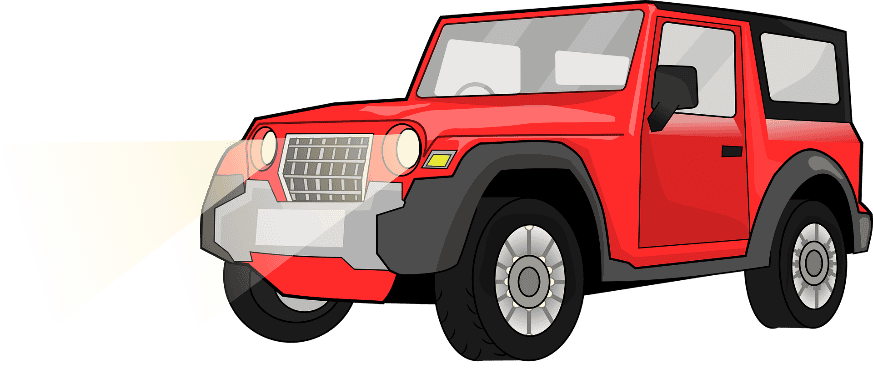
- larger diameter wheels and wider tires give more grip in all conditions,
- driver sitting high up (20 cm higher than in a passenger car) has better visibility both during the day (both forward and backward and to the sides because the driver’s eyes are at a higher level than in passenger cars) and at night (from a greater height and angle the driver observes the road) and also during fog (when the driver’s eyes are above the fog)
- driver sitting high up is less sensitive to glare from headlights both front and rear (through the interior and exterior mirrors which are at a much higher height),
- better road illumination due to higher (by 10 cm) placed headlights (from higher height there is better road illumination),
- comfort of travelling on good roads comparable to passenger cars of the same class,
- greater comfort on uneven and/or bad roads,
- performance on a level with passenger cars of similar engine capacity,
- better visibility when driving, manoeuvring and parking due to higher seated driver and due to increased cabin glazing due to higher height of all windows,
- It overcomes high kerbs and deep potholes well (ground clearance is 30 mm higher than in a passenger car),
- is more comfortable to get in and out of.
Disadvantages of SUVs
- the higher center of gravity of an SUV results in a more tippy car,
- higher air resistance due to a larger frontal area (in SUV even more than 50% larger than in passenger cars) affect the lower performance and higher fuel consumption especially visible at speeds above 90 km / h,
- higher fuel consumption due to the 4×4 drive (applies to all off-road vehicles) associated with a minimum of 2 times more rotating elements in the transmission system and increased weight of the vehicle associated with additional 4×4 drive components; increased fuel consumption is particularly noticeable in urban driving conditions and is about 1 litre per 100 km compared to a car with only one axle
- greater width of the car (for an SUV even by 30 cm compared with a city car) due to the large wheelbase, which makes parking in narrow parking spaces more difficult,
- greater height of the car together with the antenna which may make it difficult to enter low garages,
- high maintenance costs (more oil to change, expensive spare parts and tires).
The Most Common Causes of Jeep Car Breakdowns
Like any car brand, Jeep also has its advantages and disadvantages and is subject to minor breakdowns. We check what are the most common causes of such failures.
Engine and transmission
Taking a look at the Grand Cherokee model, we will present some of the faults that its users have to deal with. When buying a copy from the beginning of this century, we must be aware that it will suffer from several problems.
Jeep Grand Cherokee II (WJ) has an unreliable 3.1 TD/140 hp diesel engine, produced by Italian company VM Motori. It arouses the resentment of most mechanics because it is difficult to repair. High mileage and the quality of parts leaving much to be desired, as well as negligent servicing mean that the 3.1 TD diesel engine does not currently guarantee reliability due to leaks, cooling system and starting problems. In addition, it provides average performance and is not very economical. Versions with this engine also have a less robust transmission. If the automatic transmission fails, the expense can be as high as $2,000 for repair or buying a used transmission for $500-1,000.
Brakes and electronics
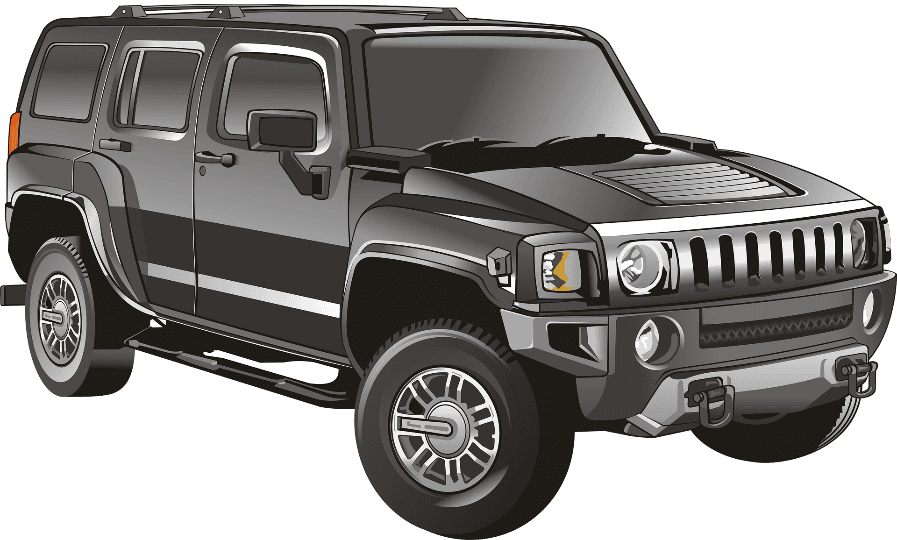
The brakes are another touchy part of the Jeep Grand Cherokee. They have a tendency to overheat and work unevenly. The manufacturer used faulty calipers, which leads to wobbling of the brake discs and deformation of the pads, but fortunately you can get rid of this issue by replacing the calipers with other, properly fitted ones. It is also worth checking the manufacturer’s oil recommendations, the wrong choice of which can lead to squeaks and gnarls in the drive train. It is also worth paying attention to the condition of shock absorbers, which “like” to leak.
Minor failures may also relate to electronics. Malfunctioning electric windows, the lack of heated seats and a concern with Climatronic air conditioning, which manifests itself with the emergence of only cold or warm air from it despite changing the temperature by pressing buttons on the console.
If you have a problem with your car, this is the place to get help: www.jeepzine.com. We hope you found what you were looking for!